
Gold and Devotion
Offering of valuables at sacred places
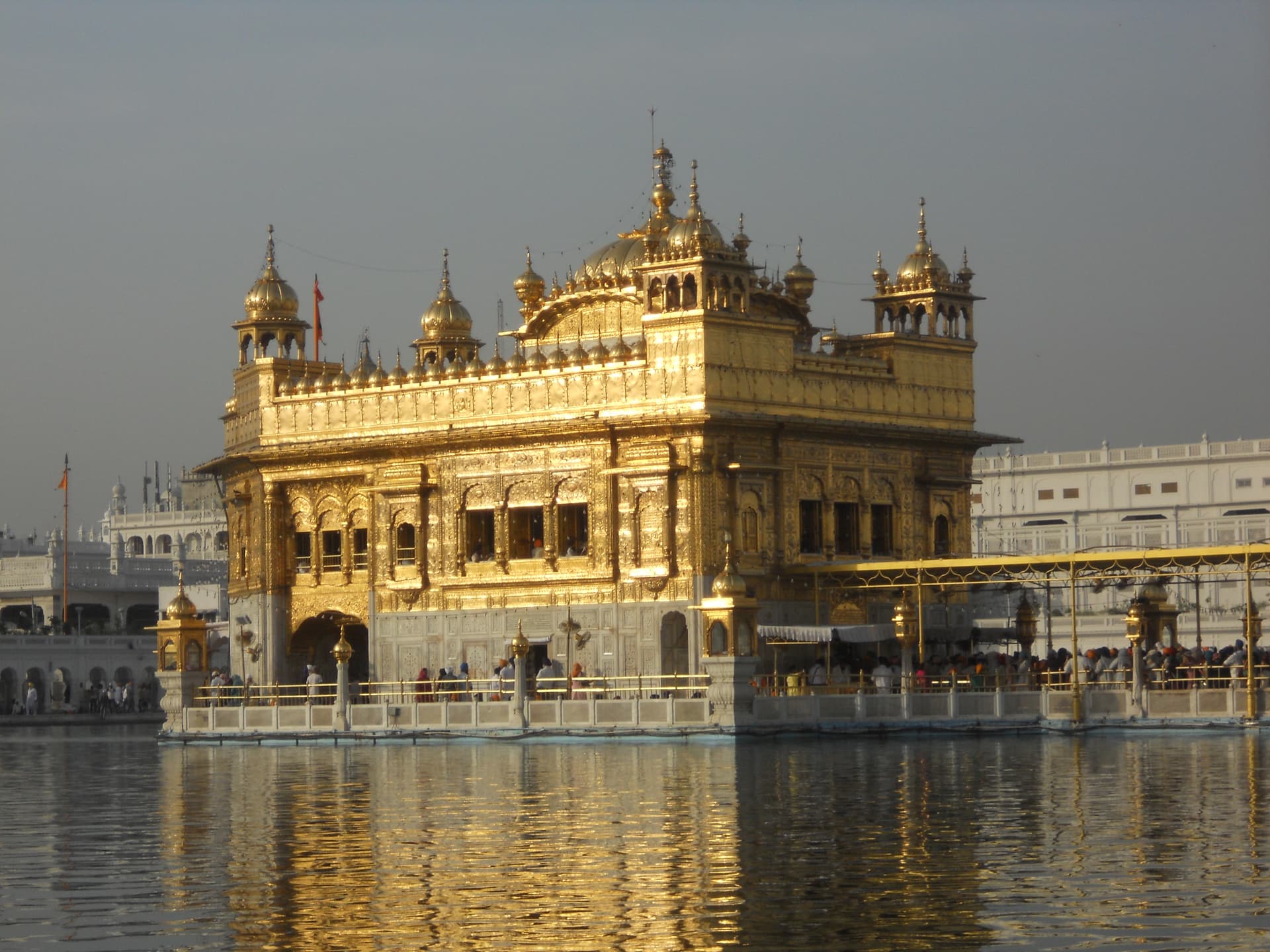
Offerings of gold and other valuables at sacred places appear across religious traditions. Sri Harmandir Sahib in Amritsar, India, the central place of worship in Sikhism, is known worldwide as the Golden Temple because of the gold plating on its upper stories. The plating was built up over two centuries through donated wealth and donated labor, and similar practices of offering appear at sacred places in Buddhism, Hinduism, Christianity, and the ancient world.
The Gilding of the Golden Temple
Maharaja Ranjit Singh, the ruler of the Sikh Empire in India, funded the gilding of the temple's upper stories between 1803 and 1830. Gold foil was applied over copper plates. The lower stories are faced with white marble, and the copper plates on the upper stories and the dome are covered with gold. The gilding gave the temple its common English name. Those plates lasted more than 150 years.
The plates were replaced in a Kar Seva, a voluntary religious service, carried out between February 1995 and April 1999. The new plating used roughly 500 kilograms of 24-carat gold, worked onto copper plates. The work was completed in the year of the 300th anniversary of the Khalsa, the community of initiated Sikhs established in 1699. The Guru Nanak Nishkam Sewak Jatha, a Sikh volunteer organization based in Birmingham in the United Kingdom, was among the organizations that carried out the service.
Figures for the total amount of gold on the temple circulate widely, including a commonly repeated total of 750 kilograms. No officially published total exists.
Since 2000, volunteers of the same Birmingham organization have traveled to Amritsar each year to clean the gold plating by hand, using water, soap nut, and lemon juice rather than chemicals. The Shiromani Gurdwara Parbandhak Committee, the body that manages the temple, entrusts this annual service to the group. In Sikh practice, the giving of gold and the cleaning of it are both Seva, selfless service offered without payment.
Offerings at Sacred Places Across Traditions
Gold does not tarnish or corrode. Gilding applied to a sacred structure keeps its appearance over long periods, while silver blackens and copper turns green. Several traditions gild their most significant sites and receive gold as an offering.
The Shwedagon Pagoda is a gilded Buddhist stupa located in Yangon, Myanmar. Buddhists in Myanmar regard it as the country's most sacred pagoda. Buddhist tradition holds that it enshrines relics of the Buddha, the founder of Buddhism, including strands of his hair. Its brick core is covered with plates of gold attached by rivets. A tradition of gold donation began in the fifteenth century, when Queen Shin Sawbu, a ruler of the region, gave her own weight in gold to the pagoda. Rulers and devotees have donated gold to maintain the pagoda since. Buddhists regard such giving as a way of earning merit, the spiritual benefit of good deeds.
The Tirumala Venkateswara Temple, in the southern Indian state of Andhra Pradesh, is a Hindu temple dedicated to Venkateswara, a form of the deity Vishnu. It is one of the most visited sacred places in the world. Devotees place offerings into the Hundi, the temple's donation vessel, including gold jewelry and coins. Many pilgrims also have their heads shaved at the temple as an offering.
Catholic churches in Europe and Latin America display Ex-Votos, small offerings of silver or gold in the shape of hearts, limbs, or plaques. They are given in gratitude for prayers the giver regards as answered, or in fulfillment of a vow. In Orthodox Christianity, icons, the painted images used in worship, are often fitted with a Riza, a cover of silver or gold that leaves the painted face and hands visible. Rizas are frequently donated by individual families.
The practice is older than these traditions. In the ancient Greek world, city-states built treasuries at sanctuaries such as Delphi, a major sanctuary of the god Apollo, to house the offerings they dedicated there.
Teachings on Offerings
Each of these traditions also carries teachings on the value of offerings. Sikh teaching holds that ritual gifts have no value without inner devotion, and places truthful living and the remembrance of God above material acts. Islamic teaching holds that neither the flesh nor the blood of a sacrificial offering reaches God, and that only the devotion of the giver does. According to Jewish tradition, the prophets, figures regarded as messengers of God, taught that obedience to God matters more than sacrifice. Christian scripture recounts Jesus, whom Christians believe to be the Son of God, praising the two small coins given by a poor widow above the larger gifts of the wealthy.