Sacred Places Near Me

What Is a Pilgrimage

What Is a Pilgrimage
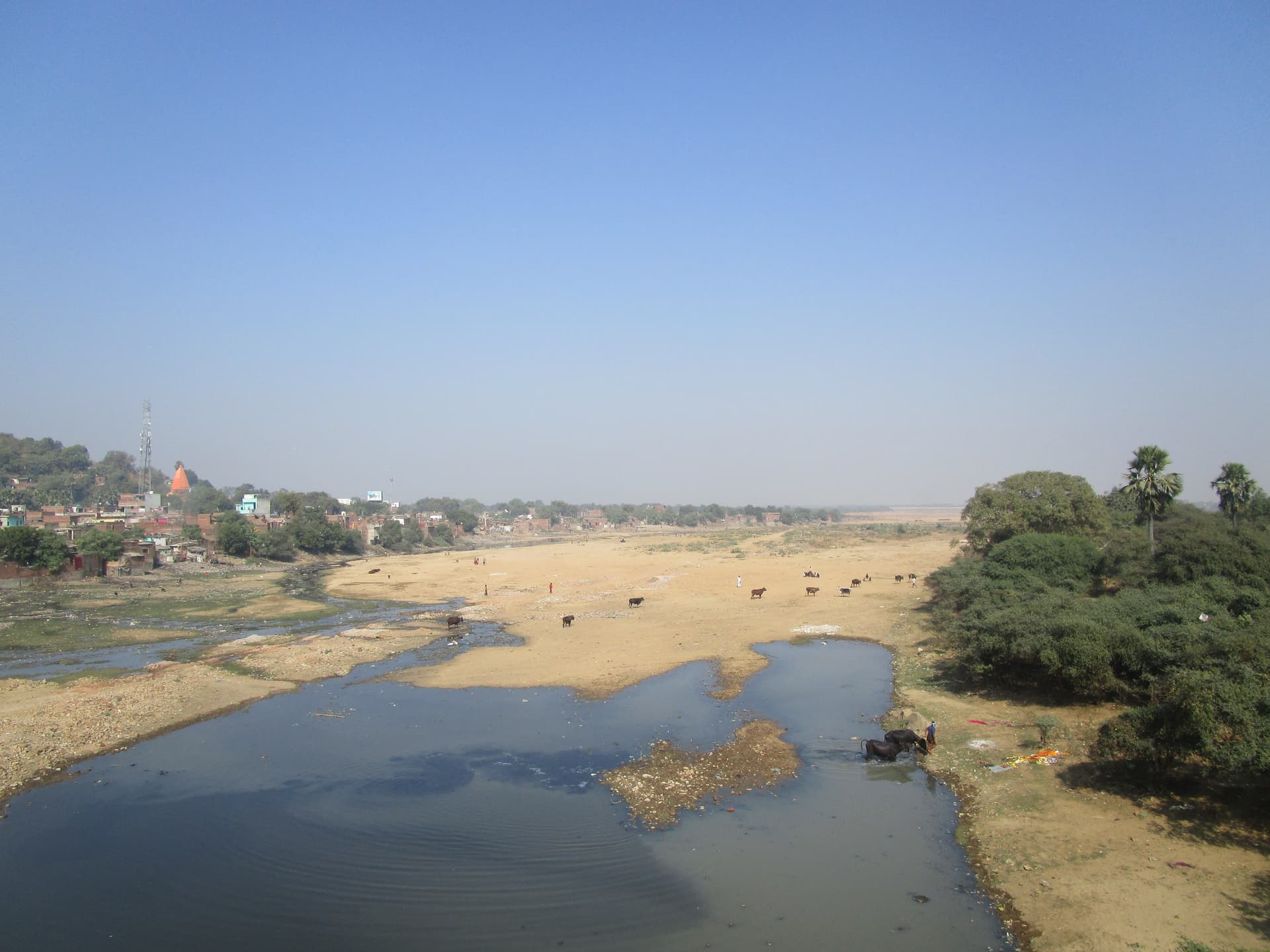
Ximonic (Simo Räsänen), CC BY-SA 4.0, via Wikimedia Commons

A pilgrimage is a journey to a place that people understand as sacred, in which the journey itself becomes part of a religious, spiritual, or personal practice. What marks a journey as a pilgrimage is not the distance covered or the destination alone, but the meaning carried by the going. A pilgrimage is shaped throughout by the sense that the movement, the effort, and the arrival all belong to something larger than travel.

Characteristics of a pilgrimage

A pilgrimage is different from ordinary travel because of the aspects of sacredness and meaningfulness added to it. A pilgrimage is heading toward a sacred place, ritual center, shrine, tomb, temple, mosque, church, synagogue, relic, mountain, river, or an entire landscape, and has one or more of the following characteristics:

Sacred destination: The place the pilgrimage wants to reach is regarded as holy, blessed, powerful, ancestral, tied to scripture, the site of a reported miracle, or as otherwise ritually significant.

Meaningful movement: The specific way a person travels is itself part of the practice. Walking a long route on foot, circling a sacred object or building, climbing to a high place, bathing in a sacred river, or passing through a prescribed sequence of sites can each carry religious meaning, rather than serving only to bring the pilgrim to the destination.

Hope of transformation: Pilgrims may seek purification, forgiveness, healing, protection, blessing, merit, the fulfillment of a vow, insight, or a life transition through the journey.

Temporary community: Pilgrimage often gathers strangers into the same effort, and the sharing of a route, of hardship, food, lodging, song, and prayer can bind them together for the length of the journey. This companionship, and the giving and receiving of help along the way, can become an important part of the pilgrimage.

Embodied commitment: Time, cost, discomfort, uncertainty, and physical effort of the journey can become parts of what gives it meaning, setting the journey apart from ordinary life and marking it as worth the difficulty.

Expectations on return: The pilgrim often is expected to come home altered in some way: purified, blessed, forgiven, recognized within the community, or newly oriented. The change carried home then becomes one of the reasons the pilgrimage was made.

The journey and the destination

A pilgrimage consists of a journey and a destination. What distinguishes one pilgrimage from another is where the weight of meaning lies between them.

At one end, the weight rests almost entirely on the destination. The journey brings the pilgrim there, but arriving and taking part in what happens at the place is the point. The shrine of Lourdes in France and Sri Harmandir Sahib, the Golden Temple in Amritsar, are destinations of this kind.

At the other end, the weight rests mostly on the journey itself. The destination is regarded as sacred or spiritually meaningful, but the days or weeks of walking carry most of the meaning. The Camino de Santiago in Spain is one of the best-known examples today.

Most pilgrimages lie between these poles, and some hold both at once: on the 88-temple pilgrimage of the Japanese island of Shikoku, the long way on foot and the temples along it are equally part of the practice.

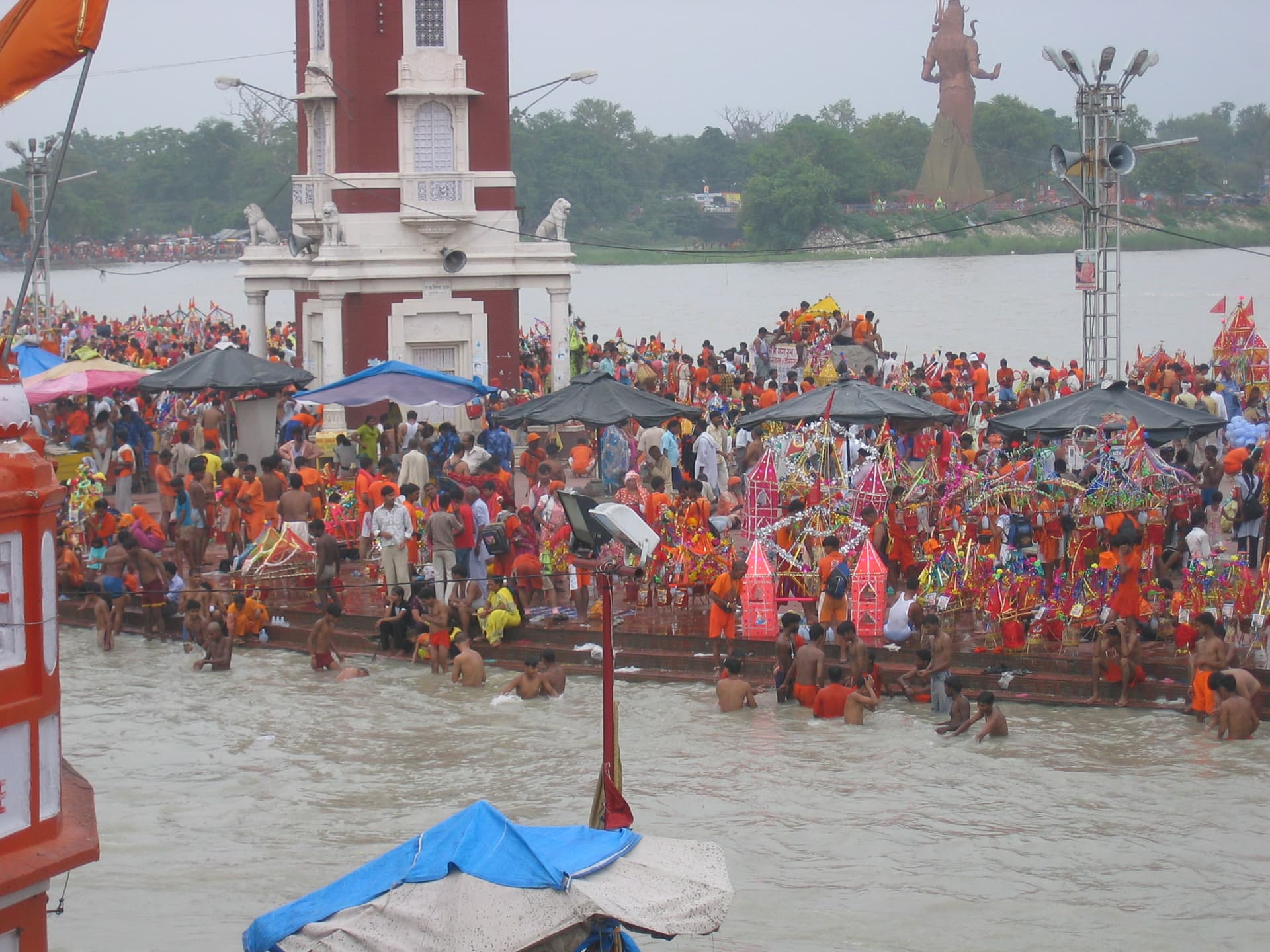
The destination can take different forms. It may be a built place: a temple, church, mosque, shrine, or tomb. It may be a natural one: Hindus, Buddhists, Jains, and followers of Bön (Tibet's indigenous pre-Buddhist tradition) circle Mount Kailash rather than climbing it, and Hindus bathe in the river Ganges, one of the most sacred rivers in Hinduism. It may be a single place or a linked series visited in a recognized sequence: according to Buddhist sources, the Buddha himself named the four places of his birth, awakening, first teaching, and death, at Lumbini, Bodh Gaya, Sarnath, and Kushinagar, and pilgrims often combine them into one pilgrimage. And it may be a live event like the Kumbh Mela, a Hindu bathing festival at sacred river sites in India, or the Arbaeen commemoration in Karbala in Iraq.

The journey can happen in many different ways. Some pilgrimages can be made at almost any time, at the pace and in the season the pilgrim chooses. Others are fixed to a point in the sacred calendar and are made by many people at once, often to reach a specific event.

Obligation and choice

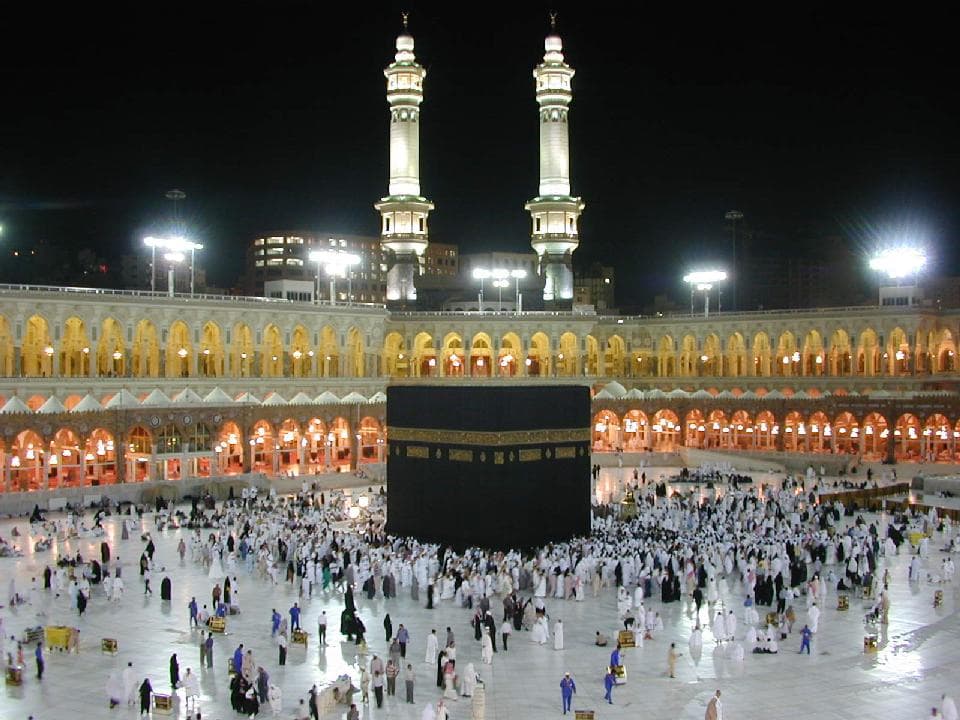
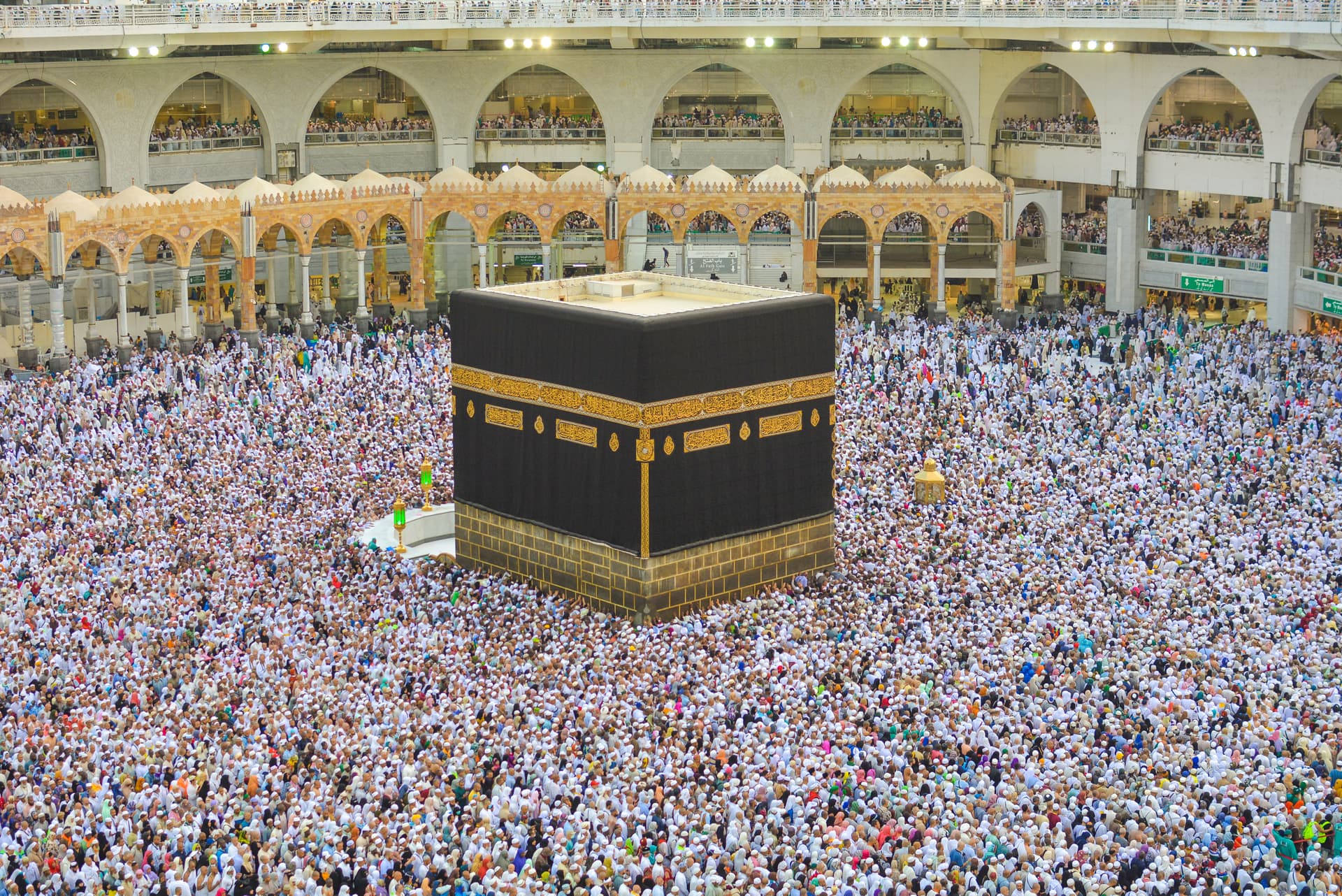
The closest global equivalent to a universally mandatory pilgrimage is the Hajj in Islam. It is one of the Five Pillars, the core duties of Muslim life, and is required once in a lifetime of every Muslim who is physically and financially able to make it.

In most traditions, pilgrimage is not commanded of everyone, yet it is deeply embedded in religious life. It is a recommended act of devotion, woven into vows, festivals, family custom, and regional practice, undertaken for merit, purification, remembrance, or the honoring of holy places, without being a condition of belonging to the faith.

In other traditions there is no religious requirement of any kind. The pilgrimage is chosen freely, for reflection, healing, gratitude, cultural memory, or spiritual searching, and it may be undertaken by people who do not share, or do not claim, the religion the pilgrimage grew from.

Motivation

There are many reasons for people to undertake pilgrimage, for example for religious, spiritual, personal, communal, or cultural reasons, or they may find their reasons on the way.

For example a pilgrim may travel to fulfill a religious duty, to ask forgiveness or to cleanse wrongdoing, to fulfill a vow made in difficulty, or to seek healing, protection, fertility, or blessing. Some go to pray at a shrine, tomb, relic, or sacred place connected with a founder, a holy figure, or a sacred event, or to follow in the footsteps of those who went before.

Other reasons can be personal and not necessarily tied to religious belief or spiritual practice. People set out during grief, during recovery from illness or burnout, after a divorce or a retirement, or while trying to reach a difficult decision. Some are drawn by the wish for simplicity, for a single path walked one day at a time with few possessions. Others want the physical challenge, or time away from the roles they carry at home, or silence in which to pray, reflect, or think.

A pilgrimage can also express belonging to a tradition, a family, a community, or a nation. It can be a way of taking part in a shared festival, of serving others through hospitality and care, or of carrying the memory of an event, a founding figure, a martyrdom, or an ancestral presence. For many pilgrims the connection formed with fellow travelers is part of the draw in itself: strangers who share a route, hardship, food, and conversation often become a temporary community for the length of the journey.

Some motivations sit at the border between pilgrimage and ordinary travel. An interest in long-distance walking, in landscape, in sacred architecture, or in cultural and interfaith learning can lead a person onto a pilgrimage, as can the wish for a journey with more structure and meaning than ordinary tourism offers.

Pilgrimage routes

→ Camino de Santiago

The Camino de Santiago, known in English as the Way of St. James, is a network of pilgrimage routes across Spain, Portugal, France and the wider European continent…