The Dormition and the Assumption of Mary
The feast of Mary's passing
The Dormition and the Assumption are the two names under which Christians mark the end of the earthly life of Mary, the mother of Jesus. Orthodox Christians keep the feast as the Dormition of the Theotokos, and Catholics keep it as the Assumption of Mary. Both fall on 15 August, but because part of the Orthodox world follows the older Julian calendar, the feast is kept in Jerusalem and many other places on 28 August of the civil calendar. The feast centers on the belief that Mary was taken up into heaven, and its oldest place of celebration is the Tomb of Mary at Gethsemane in Jerusalem.
Mary in Christian Belief
Mary was the mother of Jesus, whom Christians believe to be the Son of God. Christians honor her above all other saints. The New Testament, the Christian scriptures, records that Mary was present with the apostles, the closest followers of Jesus, after his death, but says nothing about the end of her own life. What Christians believe about her passing rests on the tradition of the early church, which took settled form in the first centuries and was carried into the feast now kept across the Christian world.
The Dormition
Dormition means falling asleep, and Orthodox Christians use the word for Mary's death, understood as a peaceful passing into the hands of God. Orthodox Christians call Mary the Theotokos, a Greek title meaning the one who gave birth to God. According to Orthodox tradition, when Mary's death drew near, the apostles were gathered to her bedside from the lands where they were preaching. At her death, the tradition holds, Christ himself received her soul. Her body was carried in procession and laid in a tomb near Gethsemane, at the foot of the Mount of Olives outside the walls of Jerusalem. Tradition holds that the apostle Thomas arrived three days later and asked to see her body, and the tomb was found empty. Orthodox Christians believe that Mary's body was raised and taken into heaven.
The Dormition is one of the twelve Great Feasts of the Orthodox Church year. It is preceded by the Dormition Fast, a two-week period of fasting from 1 to 14 August, kept more strictly than most fasts of the year. In many churches, the days of the feast include a burial service for the Theotokos, in which a shroud bearing her image is carried in procession and laid out for veneration, with the chanting of Lamentations, hymns mourning her passing.
The Assumption
Catholics keep the same feast as the Assumption of Mary. Catholic belief holds that Mary, at the end of her earthly life, was assumed body and soul into heaven. The pope defined this belief as dogma, a formally binding teaching of the Catholic Church, in 1950, giving the feast its present doctrinal weight. The definition deliberately leaves open whether Mary died before being assumed, where Orthodox tradition holds plainly that she did.
The Assumption on 15 August is one of the most important Marian feasts of the Catholic year and a public holiday in many countries. It is kept with Masses and processions across the Catholic world, and in parts of Central Europe the day carries the old custom of blessing bundles of herbs and flowers in church.
Two Calendars, Two Dates
The feast day itself is the same everywhere: 15 August. The difference lies in the calendar used to count it. The Catholic Church and many Orthodox churches follow the Gregorian calendar, the civil calendar in general use. The Patriarchate of Jerusalem, the Russian Orthodox Church, and several other Orthodox churches keep the older Julian calendar, which currently runs 13 days behind. Their 15 August therefore falls on 28 August of the civil calendar. This is why the feast of Mary's passing is kept twice in Jerusalem's calendar of celebrations, by different communities, at the same holy place.
The Tomb of Mary in Jerusalem
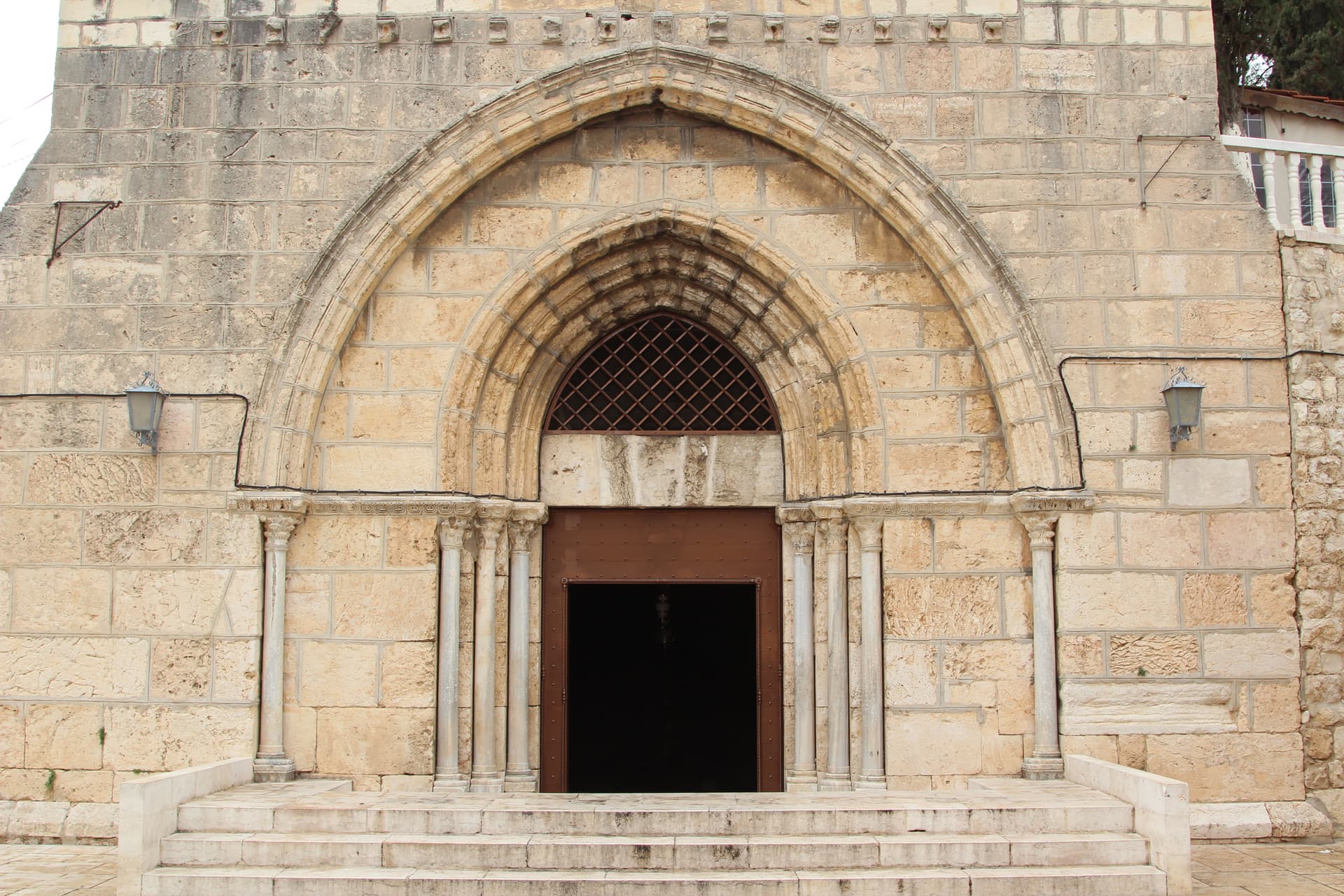
The Tomb of Mary is located in the Kidron Valley at the foot of the Mount of Olives, beside Gethsemane, the garden where Christians hold that Jesus prayed on the night of his arrest. The tomb itself is cut from the rock. A church was built over it in the Byzantine period, destroyed in the Persian invasion of 614, and rebuilt. The upper church was destroyed again after the Crusader period, leaving the underground level, and the church today is a crypt reached by a wide stone stairway of 47 steps built in the Crusader era. The tomb chamber stands within the dim rock-cut church, lit by hanging lamps, and pilgrims enter the small chamber to pray at the stone on which tradition holds Mary's body was laid.
The church is administered by the Greek Orthodox Patriarchate of Jerusalem together with the Armenian Church, under the long-standing arrangements that govern Jerusalem's shared holy places, and the liturgy is celebrated there daily. A separate Christian tradition associates Mary's last years with the city of Ephesus, in present-day Turkey, where a house venerated as her dwelling is a place of pilgrimage. The Jerusalem tradition, tied to the tomb at Gethsemane, is the older and the one carried in the feast's liturgy.
The Feast at the Tomb
In Jerusalem, the feast begins before the feast day. In the days leading up to the Dormition, an icon of the Theotokos is carried in procession from the Patriarchate's church near the Church of the Holy Sepulchre, through the streets of the Old City, out through its walls, and down across the Kidron Valley to the tomb at Gethsemane. Crowds line the route, and at the tomb the faithful pass beneath the icon as they enter the church. The burial shroud of the Theotokos is laid out for veneration, and on the eve of the feast the Lamentations are chanted at the tomb, mourning Mary's passing at the place where tradition holds she was buried. Services continue through the feast, and at its leave-taking, the closing of the festal period some days later, a procession returns the icon to the Old City. Pilgrims from the Orthodox world travel to Jerusalem for these days, and the narrow stairway of the tomb church fills from early morning until night.