
The Eighth Centenary of the Death of Saint Francis
Eight hundred years after the death of Francis of Assisi
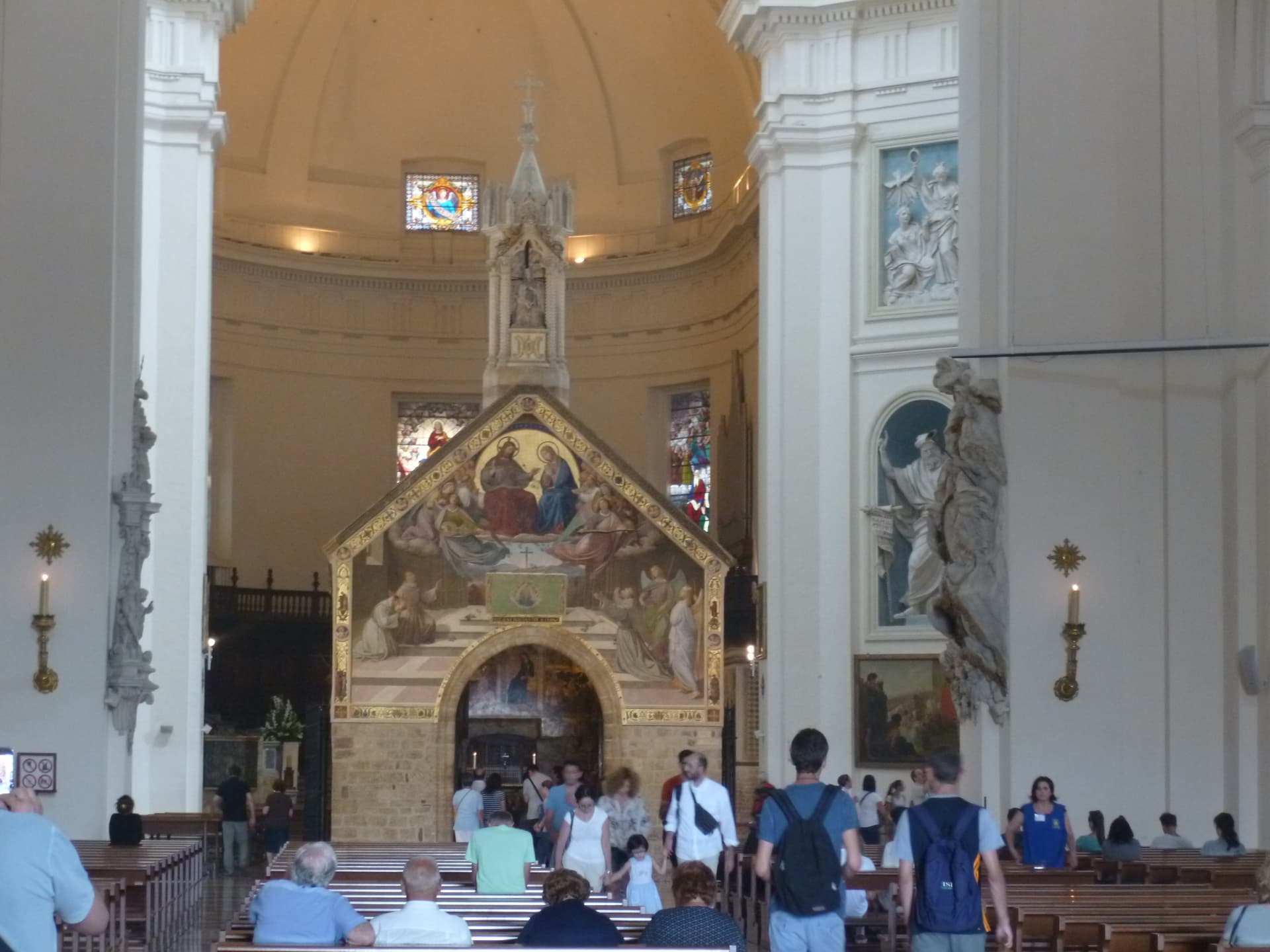
Saint Francis of Assisi was a Christian who gave up his wealth to live in poverty, founded the Franciscan orders, and died on October 3, 1226, at a small chapel below the town of Assisi in central Italy. The eighth centenary of his death falls in 2026. Catholics honor Francis as a saint, a person the Church holds up as an example of a holy life, and his tomb in the Basilica of San Francesco in Assisi is a pilgrimage destination. A ceremony called the Transitus (Latin for "passage") commemorates his death every year on the evening of October 3. His feast day, the day the Church sets aside each year to honor him, is October 4. For the centenary, Pope Leo XIV proclaimed a Jubilee Year, the remains of Francis were shown in public for the first time, and October 4 became a national public holiday in Italy.
About Francis of Assisi
Francis was born in Assisi in 1181 or 1182, the son of a wealthy cloth merchant. Around 1202 he fought in a war between Assisi and the neighboring city of Perugia, was captured, and spent about a year in prison. After his release he fell seriously ill, turned away from his former life, and spent long periods in prayer.
Franciscan tradition holds that while Francis was praying in the ruined church of San Damiano outside Assisi, he heard the figure of Jesus on the crucifix tell him to repair the church. He took cloth from his father's shop and sold it to pay for the repairs. His father, angry at the loss, took him before the bishop of Assisi in 1206 to recover the money and to cut him off from his inheritance. Before the bishop, Francis handed back the money and the clothes he was wearing and gave up all claim to his father's property. From then on he owned nothing. He wanted to live as he understood Jesus and the first apostles had lived: without money or possessions, trusting in God for food and shelter. He repaired abandoned churches around Assisi with his own hands and cared for lepers, people with a disfiguring skin disease who were forced to live outside the towns.
Other men from Assisi joined him. In 1209 Francis and his companions went to Rome, where Pope Innocent III gave spoken approval to their rule of life. The rule was a short text drawn from the Gospels, the four books of the Bible that tell the life of Jesus. It bound the brothers to own nothing, to live from work and from begging, and to preach. The group became the Order of Friars Minor, meaning "lesser brothers," the first of the Franciscan orders. In 1212 Clare of Assisi, a young woman from a noble family of the town, left her home to follow the same way of life, and the community of women later known as the Poor Clares began. A revised rule for the friars was approved in writing by Pope Honorius III in 1223.
Catholic tradition holds that in September 1224, during a period of prayer on Mount La Verna in Tuscany, Francis received the stigmata, wounds in his hands, feet, and side matching the wounds of Jesus on the cross. By then he was in poor health and nearly blind. In 1225 he composed the Canticle of the Creatures, a song praising God through the sun, the moon, water, fire, and the earth.
Francis and the Animals
Franciscan tradition holds that he preached to a flock of birds near the town of Bevagna, calling them his sisters and telling them to praise God, and that the birds did not fly away until he had blessed them. According to a later Franciscan account, a wolf had been attacking the people of the town of Gubbio, and Francis went out to meet it and made peace between the wolf and the town, which agreed to feed it. In the Canticle of the Creatures, his song of praise to God, he addresses the sun, the moon, water, fire, and the earth as his brothers and sisters. Franciscan tradition presents this as the belief that every created thing comes from the same God. In 1979 Pope John Paul II declared Francis the patron saint of ecology. Many parishes hold a blessing of animals on or near his feast day, and people bring their pets to church for it.
The Porziuncola
Francis died at the Porziuncola (Italian for "little portion"), a small stone chapel dedicated to Mary, the mother of Jesus. It is located on the plain about four kilometers below the town of Assisi. Monks of the Benedictine order gave the abandoned chapel to Francis, who repaired it, and it became the first home of the Franciscan brothers. In September 1226, knowing that he was dying, Francis asked to be carried down from Assisi to the Porziuncola. He died there in a cell of the infirmary beside the chapel on the evening of Saturday, October 3, 1226, at the age of about forty-four.
Franciscan tradition holds that Francis asked to be laid unclothed on the bare ground to die, as a last act of the poverty he had chosen, and that the brothers sang psalms, prayers from the Bible, around him as he died. In the Church's calendar a new day begins at sunset. Because Francis died after sunset, his feast day was fixed on October 4.
The cell where he died is preserved as the Chapel of the Transitus (Latin for "passage"). From 1569 the large Basilica of Santa Maria degli Angeli (Saint Mary of the Angels) was built around the Porziuncola. The small chapel is located directly under the dome of the basilica, and the Chapel of the Transitus is located a few steps behind it.
The Transitus
Franciscan communities around the world hold a ceremony called the Transitus on the evening of October 3, the eve of his feast day, to commemorate the death of Francis. The ceremony may include a reading of the account of Francis's death from the earliest Franciscan writings, the Canticle of the Creatures sung or read aloud, and prayers. In many places candles are put out at the moment the death is recounted. In Assisi the Transitus is held at the Basilica of Santa Maria degli Angeli, at the place where Francis died.
The Feast of Saint Francis
October 4 is the feast of Saint Francis in the Catholic calendar. In Assisi the celebrations extend over several days at both the Basilica of Santa Maria degli Angeli and the Basilica of San Francesco in the town above. A lamp burns continuously before the tomb of Francis, and each year a different region of Italy provides its oil. In 1939 Pope Pius XII declared Francis a patron saint of Italy, a saint regarded as the special protector of the country, together with Catherine of Siena.
The Tomb in the Basilica of San Francesco
Francis was canonized, formally declared a saint, by Pope Gregory IX in Assisi on July 16, 1228, less than two years after his death. On the following day the pope laid the foundation stone of the Basilica of San Francesco, built on the western edge of the town as the church to hold his tomb. The lower of its two churches was completed by 1230. On May 25, 1230, the body of Francis was moved there from its temporary burial place in the church of San Giorgio, where the Basilica of Saint Clare is now located. The burial place inside the lower church was concealed. In the Middle Ages the remains of saints were venerated as relics, and towns competed to possess them. The exact location was forgotten until 1818, when a search ordered by Pope Pius VII found the remains beneath the floor of the lower church. A crypt, an underground chamber, was then cut into the rock around the tomb, and pilgrims have been able to pray at it since. The Basilica of San Francesco is a UNESCO World Heritage Site. It is in the care of the Conventual Franciscans, one of the three branches of the Franciscan friars.
The Eighth Centenary
Pope Leo XIV proclaimed a Jubilee Year of Saint Francis running from January 10, 2026, to January 10, 2027. A jubilee year is a period in which the Catholic Church grants a plenary indulgence, the full remission of the punishment that Catholic teaching holds a person still owes for sins already forgiven, to those who fulfill set conditions. For this jubilee the conditions include confession, communion, prayer for the pope's intentions, and a pilgrimage visit to a Franciscan church or a church dedicated to Francis anywhere in the world.
As the central event of the centenary year, the remains of Francis were taken out of the crypt and displayed at the foot of the main altar in the lower church of the Basilica of San Francesco from February 22 to March 22, 2026. It was the first public display of the remains since the burial in 1230. Several hundred thousand pilgrims came to Assisi to see them.
The central celebrations of the centenary take place in Assisi on October 3 and 4, with the Transitus at the Basilica of Santa Maria degli Angeli on the evening of October 3 and the feast day services on October 4.
- → Basilica of San Francesco
- → The Calendars Behind Sacred Days. How Sun and Moon set the dates of sacred days
- → Basilica of Santa Maria degli Angeli
Additional Resources
- San Francesco Vive, the official site of the eighth centenary
- Dedication of the Basilica of San Francesco in Assisi, Franciscan Tradition
- André Vauchez, Francis of Assisi: The Life and Afterlife of a Medieval Saint (Yale University Press, 2012)