
The Mawlid
The celebration of the Prophet Muhammad's birthday
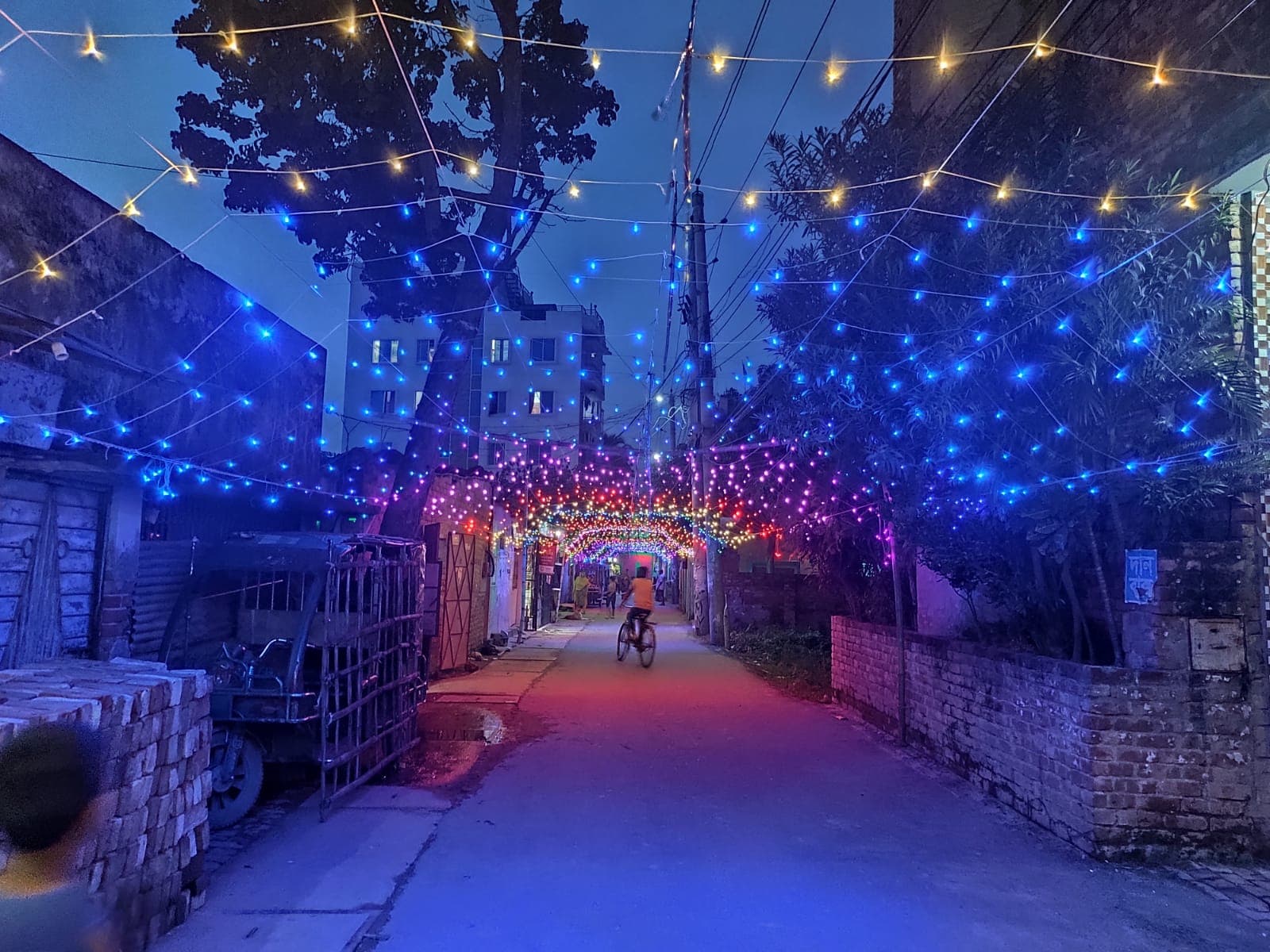
Mawlid al-Nabi ("the birth of the Prophet") is the yearly celebration of the birthday of the Prophet Muhammad, the founding prophet of Islam. Muslims mark it on the twelfth day of Rabi' al-Awwal, the third month of the Islamic calendar. It is a national holiday in most Muslim-majority countries and is marked with devotional poetry, gatherings in mosques and homes, processions, lights, and shared food. The celebration is known by different names across the Muslim world: Milad or Milad-un-Nabi in South Asia, Mevlid in Turkey, Maulidi in East Africa, and Maulid in Indonesia.
The Prophet Muhammad and the Date of the Mawlid
Muhammad was born in Mecca, in present-day Saudi Arabia, around 570 CE. According to Islamic tradition he began to receive revelations from God in 610 CE, and that these revelations form the Quran, the holy scripture of Islam. He died in 632 CE in Medina and is buried there, at the site of the Prophet's Mosque. Islamic tradition places his birth in the month of Rabi' al-Awwal. The twelfth day of the month became the most common date, and some Muslim communities mark the seventeenth instead. Islamic tradition also locates the house where Muhammad was born close to the Great Mosque of Mecca, and a library building was later constructed at the site.
The Islamic calendar follows the moon and is about eleven days shorter than the solar year. The date of the Mawlid therefore moves through the seasons over the years, falling in every month of the Western calendar in turn.
The Origins of the Mawlid
While the earliest recorded Mawlid celebrations were held at the ruling court, the first large public Mawlid festival on record took place in 1207 in Erbil, a city in present-day northern Iraq, as an annual festival with sermons, poetry recitations, feasts, and gifts for the poor, drawing visitors from the surrounding regions. Over the following centuries the practice spread across the Muslim world. In 1588 the Ottoman Empire, which then ruled much of the Middle East and southeastern Europe, declared the Mawlid an official holiday.
The Celebration of the Mawlid
Devotional poetry is at the center of the Mawlid. Poems recounting Muhammad's birth, life, and character are recited in mosques, in homes, and at public gatherings, and some of these poems have been in continuous use for centuries and exist in many languages. Gatherings also include readings from the Quran, prayers, and shared meals. In many countries, streets, homes, and mosques are decorated with lights, processions move through towns, and sweets are exchanged. In many gatherings the assembly rises to its feet when the recitation reaches the moment of the birth. Giving food and charity to the poor is part of the day in most places.
The forms differ from region to region. In Turkey the occasion is called Mevlid Kandili, one of the nights of the year on which the minarets of mosques are illuminated, and a fifteenth-century Turkish poem on the Prophet's birth is recited in mosques and homes. In Egypt, shops sell sugar figures made only for this season, and large public celebrations are held. In Indonesia, the royal cities of Yogyakarta and Surakarta on the island of Java mark the Mawlid with Sekaten, a week of ceremonies during which palace musicians play ceremonial gamelan, bronze percussion orchestras, at the royal mosques. On the island of Lamu in Kenya, the Maulidi festival fills the old town with days of processions and recitations and draws visitors from across East Africa. In South Asia, Milad-un-Nabi is marked with processions, green lights and flags, and gatherings where the story of the Prophet's life is recounted.
There are quieter forms as well. Islamic tradition holds that Muhammad fasted on Mondays and connected this practice to the day of his birth. Some Muslims honor the day through fasting, prayer, and the study of his life.
- → The Calendars Behind Sacred Days. How Sun and Moon set the dates of sacred days
- → Prophet's Mosque
- → Great Mosque of Mecca
- → Great Mosque of Kairouan
Additional Resources
- Marion Holmes Katz, The Birth of the Prophet Muhammad: Devotional Piety in Sunni Islam (Routledge, 2007)
- Annemarie Schimmel, And Muhammad Is His Messenger: The Veneration of the Prophet in Islamic Piety (University of North Carolina Press, 1985)