
Rosh Hashanah in Uman
At the grave of Rebbe Nachman of Breslov
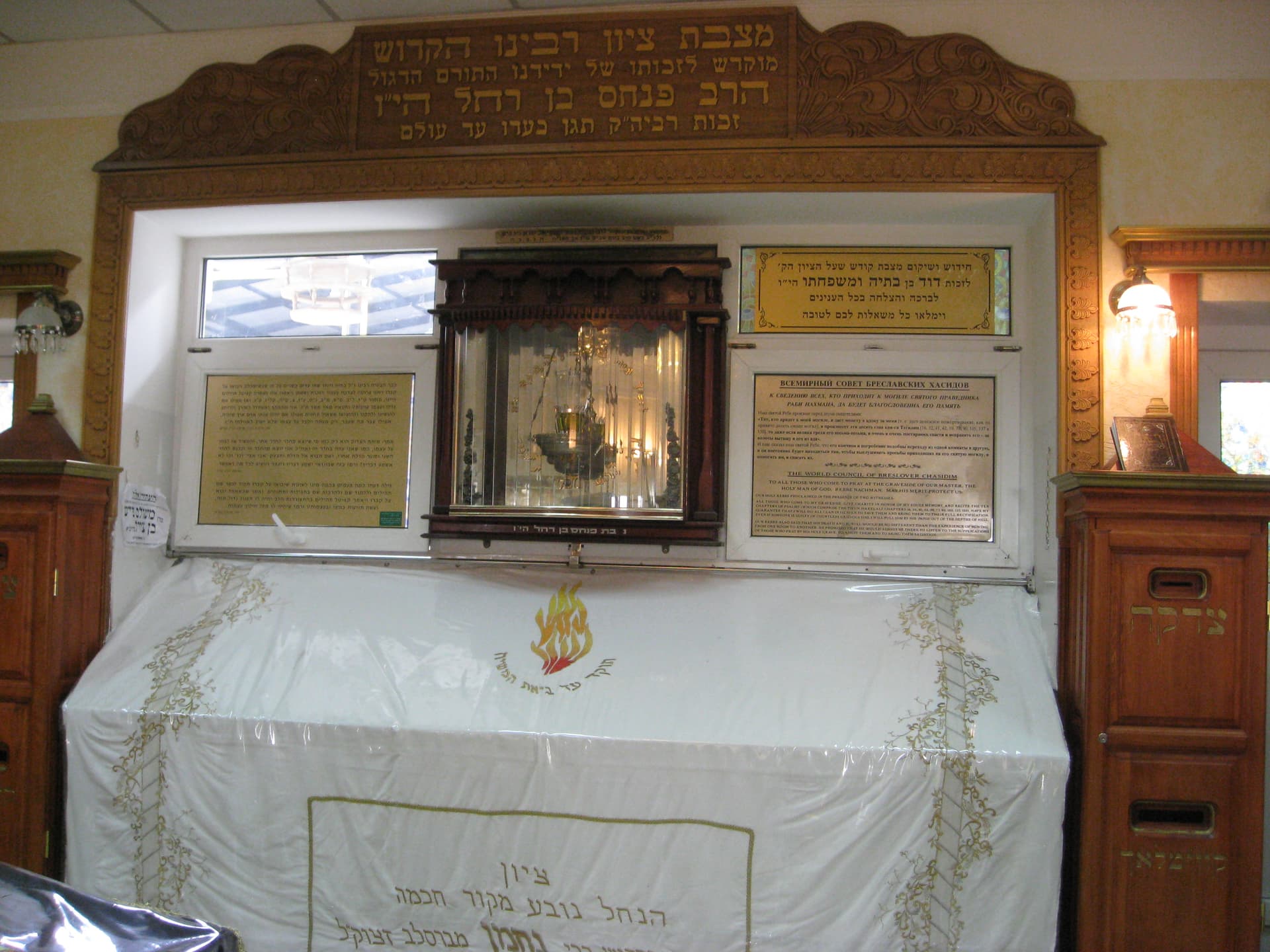
Rosh Hashanah in Uman is the annual gathering of tens of thousands of Jews at the grave of Rebbe Nachman of Breslov, an 18th-century Jewish spiritual teacher, in the town of Uman in central Ukraine, for the two days of Rosh Hashanah, the Jewish New Year. The gathering is led by the Breslov Hasidim, the community that follows Nachman's teaching. Breslov Hasidim hold that Nachman asked his followers to spend Rosh Hashanah with him, and that this request did not end with his death. Rosh Hashanah is a festival of the family table and the local synagogue. Jews mark it at home, wherever they live, and there is no place they are expected to travel to for it, with the exception of Uman.
About Rebbe Nachman of Breslov
Rebbe Nachman of Breslov (1772 to 1810) was a leader of Hasidism, a movement within Judaism that began in Eastern Europe in the 18th century. Hasidism places joy, prayer and the bond between a community and its Rebbe, its spiritual leader, at the center of religious life. Nachman was the great-grandson of the movement's founder, known as the Baal Shem Tov, and grew up in the town where the founder had lived. He taught in the town of Bratslav, called Breslov in Yiddish, and his followers took its name.
Nachman taught that a person should speak to God alone and in their own words every day, as to a friend, and that this private prayer matters more than any formal practice. He taught that joy is a religious duty and despair the one thing to be resisted at any cost. He taught that no one is ever too far gone to return, and he chose ten Psalms that he said would set right whatever a person had done wrong. His stories, told in the manner of folk tales, are still read in Breslov communities. He died in Uman in 1810 and was buried there.
The Promise
Breslov Hasidim hold that shortly before his death, in front of two witnesses, Nachman made a promise. Whoever comes to his grave, gives a coin to charity and recites the ten Psalms he had chosen, he would do everything in his power to help, whatever that person had done, provided they resolved not to return to it. This promise, together with his request to be with him on Rosh Hashanah, is the basis of the pilgrimage.
Rosh Hashanah
Rosh Hashanah falls on the first two days of the Hebrew month of Tishrei, in September or early October. Jews regard it as the day on which the coming year is judged, and mark it with prayer, the sounding of the shofar, a ram's horn, and festive meals. It opens the ten days of repentance known as The Days of Awe, which end with Yom Kippur, the Day of Atonement.
The Days of the Gathering
Pilgrims begin arriving in the days before Rosh Hashanah. The streets around the grave become a Jewish quarter for the week, with kosher kitchens, dormitories and rented apartments. Throughout the visit, pilgrims pray at the grave, give charity, and recite the ten Psalms there. Many spend time alone in the fields and parks around the town in the private, spoken prayer that Nachman taught.
The festival itself is spent in prayer. The evening service on the first night, which Breslov Hasidim regard as the most weighty moment of the year, is held in the main synagogue beside the grave and in every other prayer space in the quarter. The morning services of both days include the sounding of the shofar. Between services, pilgrims study the lessons Nachman gave on Rosh Hashanah and share festive meals in communal dining halls.
On the afternoon of the first day, pilgrims walk together to a lake for Tashlich, the custom of reciting verses beside water on Rosh Hashanah as a symbolic casting away of sins. Thousands of men take part at once, and the Tashlich ends in singing and dancing around the water. The gathering disperses after the festival ends on the evening of the second day.
From Origin to Present
The first Rosh Hashanah gathering at the grave was held in 1811, the year after Nachman's death, and it continued every year through the 19th century. Under Soviet rule the town was closed to outside visitors and the gathering ended. It resumed in 1989 with a few hundred pilgrims, grew year on year after Ukraine became independent, and draws tens of thousands of people, most of them from Israel and the United States. Because of the war in Ukraine there are no flights into the country, so pilgrims arrive overland from neighboring countries, and the gathering takes place under conditions set by the Ukrainian authorities.
Additional Resources
- Who is Rebbe Nachman? (Breslov Research Institute)
- Arthur Green, Tormented Master: The Life and Spiritual Quest of Rabbi Nahman of Bratslav (Jewish Lights, 1992)