
The Hungry Ghost Festival
Ullambana, the festival for the ancestors and the wandering dead
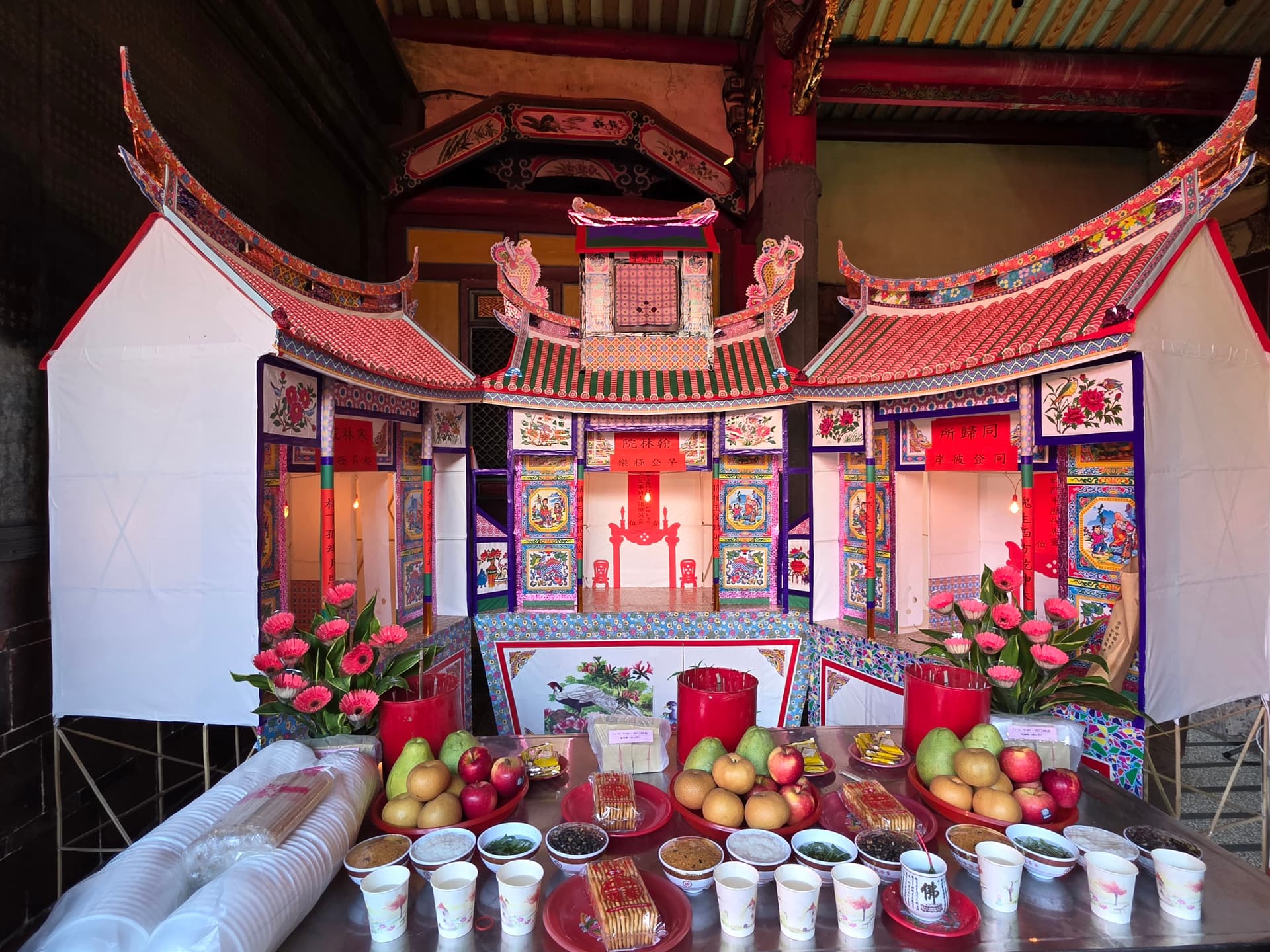
The Hungry Ghost Festival is an annual festival for the dead, celebrated across East and Southeast Asia on the fifteenth day of the seventh month of the Chinese lunar calendar, which falls in August or early September. In Buddhist tradition the festival is called Ullambana, in Daoist tradition Zhongyuan. The entire seventh lunar month is known as Ghost Month. Chinese tradition holds that during this month the gates of the afterlife open and the dead return to walk among the living. Families make offerings of food, incense, and paper goods to their ancestors and to wandering ghosts who have no one to care for them. The festival is celebrated in China, Taiwan, Hong Kong, Singapore, Malaysia, and Vietnam, and Japan's Obon festival comes from the same root.
The Story of Maudgalyayana
The Buddhist strand of the festival goes back to an account about Maudgalyayana, one of the principal disciples of the Buddha, the founder of Buddhism who taught in India around the fifth century BCE. According to Buddhist tradition, Maudgalyayana searched for his deceased mother and found that she had been reborn as a hungry ghost, wasted and unable to eat. When he offered her a bowl of rice, the food turned to burning coals before it reached her mouth. The Buddha told him that his powers alone could not free her. He instructed Maudgalyayana to make an offering of food to the community of monks on the fifteenth day of the seventh month, at the end of the monastic retreat season. The merit of this offering, transferred to the dead, released his mother from her condition. Buddhist tradition holds that offerings made on this day benefit deceased parents and ancestors of seven generations.
Hungry Ghosts
In Buddhist teaching, a hungry ghost is a being reborn into a state of constant hunger and thirst that can never be satisfied. Hungry ghosts are described with swollen bellies and throats as thin as needles, so that they cannot swallow what they crave. Rebirth as a hungry ghost is connected with greed in a former life. In Chinese folk belief the hungry ghosts also include the neglected dead: those who died without descendants, without proper funeral rites, or whose families no longer make offerings to them. The festival extends care to both, the ancestors of the family and the wandering ghosts who have no one.
Ullambana and Zhongyuan
Two traditions meet in the festival, and both grew together with older Chinese ancestor veneration. In Buddhist practice, Ullambana is the day of offerings to the monastic community, whose merit is transferred to the dead. In Daoist practice, the same day is Zhongyuan, on which the deeds of the living and the dead are said to be reviewed and forgiven. In China the two merged over the centuries into one festival that most people simply call the Ghost Festival. Temples of both traditions hold ceremonies on the day, with chanting, offerings, and rituals for the release of the dead from suffering.
Offerings and Customs
Families set out meals for their ancestors at home altars, with dishes served as if the dead were guests at the table. Offerings of food and incense are also placed outdoors, at roadsides and street corners, for the wandering ghosts. Joss paper, also called spirit money, is burned in metal containers on sidewalks and in courtyards, together with paper models of clothing, houses, and other goods, so that the dead may use them in the afterlife. In the evening, lotus-shaped lanterns are lit and set afloat on rivers and the sea to guide the dead on their way back.
In Singapore and Malaysia, outdoor stage shows called Getai are held on temporary stages in residential neighborhoods during Ghost Month, with song and opera performances late into the night. The front row of seats is left empty for the ghosts. In Taiwan, folk custom advises against swimming, weddings, moving house, and long journeys during Ghost Month. In Hong Kong, neighborhood associations hold multi-day ceremonies with bamboo theaters, offerings, and large paper effigies that are burned at the end. On the last day of the month, tradition holds that the gates of the afterlife close again, and final offerings send the ghosts on their way.
Obon and Vu Lan
In Japan the festival is called Obon, a name shortened from the Japanese form of Ullambana. Obon is held in mid-July in parts of eastern Japan and in mid-August in most of the country, following the solar calendar. Families return to their home towns, clean and visit the graves of their ancestors, and welcome the dead home with lanterns. Communities gather for Bon Odori, circle dances held on summer evenings, and in many places candle-lit lanterns are set into rivers to send the dead off at the festival's end.
In Vietnam the day is Vu Lan, held at the full moon of the seventh lunar month. It centers on gratitude toward parents and ancestors. In a custom practiced in many Vietnamese Buddhist temples, visitors wear a red rose if their mother is living and a white rose if she has died.
- → The Calendars Behind Sacred Days. How Sun and Moon set the dates of sacred days
- → Obon. Japan's season of welcoming the ancestors
Additional Resources
- Stephen F. Teiser, The Ghost Festival in Medieval China (Princeton University Press, 1988)