
Arba'een
The pilgrimage of millions to Karbala
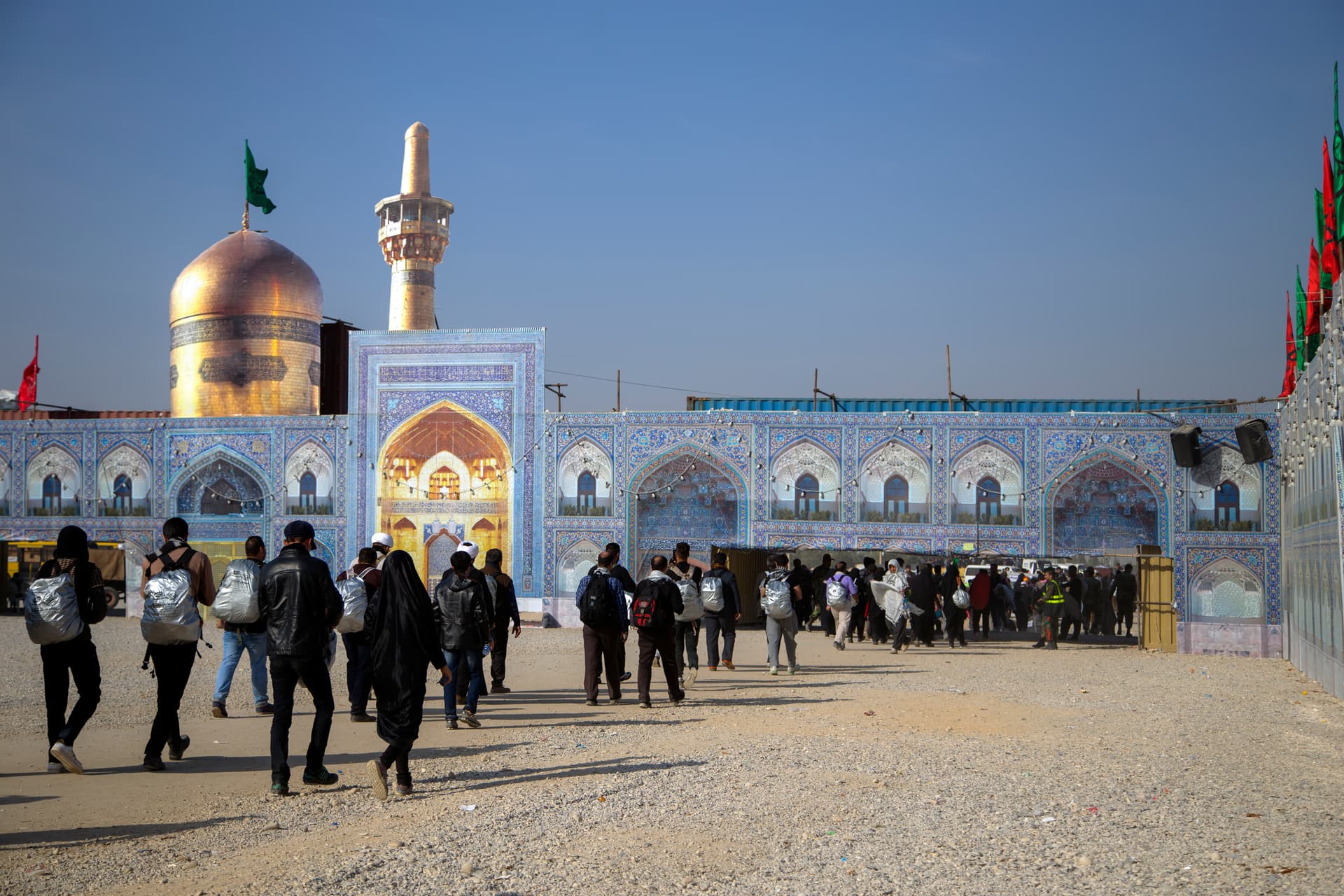
Arba'een is an annual Shia Muslim pilgrimage to the Imam Husayn Shrine, the tomb of a grandson of the Prophet Muhammad, the founder of Islam, in Karbala, Iraq. The pilgrimage is held on the fortieth day after Ashura, the day that commemorates Husayn's death. The name Arba'een means "fortieth" in Arabic. It falls on the twentieth day of Safar, the second month of the Islamic calendar, and because the Islamic calendar is lunar, its date moves through the seasons over the years. Participation is measured in the millions, and Arba'een is among the largest annual gatherings of people in the world. Its most distinctive feature is the walk: pilgrims travel to Karbala on foot, many of them over several days.
The Battle of Karbala
Husayn ibn Ali was a grandson of the Prophet Muhammad, the founder of Islam. His father was Ali, Muhammad's cousin and son-in-law, and his mother was Fatima, Muhammad's daughter. Shia Muslims hold that the leadership of the Muslim community belonged to the Prophet's family, and they regard Ali as the first Imam, a divinely guided leader, and Husayn as the third.
In 680 CE, Husayn refused to pledge allegiance to Yazid, the ruler of the Umayyad dynasty, whose rule he regarded as unjust. Travelling with his family and a small band of companions, Husayn was intercepted by a far larger Umayyad army at Karbala, a plain beside the Euphrates in present-day Iraq. On the tenth day of the month of Muharram, a date known as Ashura, Husayn and his companions, traditionally numbered at 72, were killed after being cut off from water for days. The women and children of his family, including his sister Zaynab, were taken captive.
Husayn was buried where he fell, and his grave became the heart of the city of Karbala. In Shia Islam, the events of Karbala stand for the struggle of justice against oppression and for sacrifice in the defence of faith. Mourning Husayn is a central act of Shia devotion.
The Meaning of the Fortieth Day
Marking the fortieth day after a death is a long-standing custom in Islamic cultures, and Arba'een is the fortieth day of mourning for Husayn. Shia tradition holds that the first pilgrimage to Husayn's grave took place on this day, when Jabir ibn Abd Allah, an elderly companion of the Prophet Muhammad, came to Karbala to mourn at the grave. Some accounts within the tradition also recount that Husayn's surviving family stopped at Karbala on the fortieth day, on their return from captivity. From these beginnings, visiting the grave of Husayn on Arba'een became an established practice, encouraged by the Shia Imams of the following centuries.
The Walk to Karbala
The defining practice of Arba'een today is walking to Karbala. The most travelled route begins in Najaf, the Iraqi city that holds the Imam Ali Shrine, the tomb of Husayn's father, and runs roughly 80 kilometres north to Karbala. The walk from Najaf takes about three days. The route is marked by numbered poles set fifty metres apart, 1,452 of them between the two cities. Many pilgrims walk far longer routes, from Basra in the south of Iraq, a journey of around 500 kilometres, or from other cities, and large numbers travel from Iran and from Shia communities around the world.
The walk is carried by hospitality. Along the routes, volunteers set up thousands of service stations called Mawakib, where pilgrims receive free food, water, tea, places to rest and sleep, and medical care. Families along the way open their homes to strangers. Iraqis save through the year to serve the pilgrims, and this culture of free service is described by many participants as the heart of the pilgrimage. Although Arba'een is a Shia observance, Sunni Muslims, Christians, and people of other backgrounds also take part in the walk.
At the Shrine
The pilgrimage culminates at the Imam Husayn Shrine in Karbala, the gold-domed mausoleum built over his grave. Pilgrims recite the Ziyarat Arba'een, a visitation prayer specific to the day, which greets Husayn and affirms loyalty to his cause. Mourning assemblies are held, in which the story of Karbala is retold and lamented. Most pilgrims also visit the nearby shrine of Abbas ibn Ali, Husayn's half-brother, who carried his standard at Karbala and was killed trying to bring water from the river for the besieged camp. Shia Muslims revere Abbas for his loyalty, and his shrine is located a short walk from that of Husayn.
Suppression and Revival
The pilgrimage to Karbala has been obstructed many times in its history, beginning with the early caliphs who restricted access to the grave. In the modern era, the government of Saddam Hussein banned the Arba'een pilgrimage and other public Shia observances in Iraq for roughly three decades, and pilgrims who defied the ban were punished. After the fall of that government in 2003, the pilgrimage was revived openly and grew rapidly, from around two million participants in the first year to many times that number within a decade. In the years that followed, pilgrims were repeatedly targeted by bombing attacks, and the pilgrimage now takes place under heavy security. Despite this, the numbers have continued to grow, and Arba'een has become one of the defining religious events of the Shia world.
Resources
- 1452 Poles to Karbala, Harvard Divinity School Project on Shi'ism and Global Affairs: https://shiism.hds.harvard.edu/news/2019/10/1452-poles-karbala
- Observing the Arbaeen, Centre for Muslim-Christian Studies, Oxford: https://www.cmcsoxford.org.uk/thought-pieces/observing-arbaeen